Cleaning tips for Clapham Junction homes near SW11 station
Posted on 03/07/2026

If you live close to Clapham Junction or SW11 station, you already know the rhythm of the area: early trains, busy pavements, a constant stream of people, and homes that seem to collect dust a little faster than you expect. Cleaning tips for Clapham Junction homes near SW11 station need to reflect that reality. This is not about a perfect showroom finish. It is about keeping a home fresh, manageable, and comfortable when life is moving quickly outside your front door.
Whether you are in a compact flat, a Victorian conversion, or a busy family home near the station, the right cleaning routine can make a real difference. In this guide, we will cover what matters most, how to clean more efficiently, what to prioritise in local homes, and when it makes sense to bring in extra help. No fluff. Just practical, local-minded advice you can actually use.
Why Cleaning tips for Clapham Junction homes near SW11 station Matters
Homes near Clapham Junction deal with a few cleaning pressures that people sometimes underestimate. Foot traffic brings in grit from pavements and platforms. Open windows can pull in more street dust than you would like. And in smaller London homes, one untidy corner has a habit of making the whole place feel off. You can clean the kitchen and still feel like the flat needs a reset. Annoying, but very real.
For many local residents, the challenge is not whether to clean. It is how to keep on top of it without spending every spare Saturday doing the same jobs again. That is where a smarter routine helps. The most effective cleaning tips for Clapham Junction homes near SW11 station focus on high-impact areas: floors, hallways, bathrooms, kitchens, upholstery, and anything that traps dust or odours. Small spaces especially benefit from regular maintenance, because clutter and dirt show faster in compact rooms.
There is also a lifestyle angle. Clapham Junction attracts commuters, sharers, young families, landlords, and busy professionals. Those different households all have slightly different needs, but they share one thing: time matters. A reliable cleaning plan saves time, reduces stress, and makes a home easier to live in. If you have ever rushed out the door with wet shoes still by the mat, you will know exactly what we mean.
For readers comparing home care with professional help, it can also be useful to look at broader local guidance and home-related content, such as whether Clapham suits your lifestyle or property trends in Clapham. Those topics may seem separate, but they often shape how people live in and maintain their homes.
How Cleaning tips for Clapham Junction homes near SW11 station Works
The idea is simple: clean in a way that matches the home, the neighbourhood, and your schedule. Instead of tackling everything at random, you prioritise by use, grime, and timing. That sounds obvious, but it is where many people go wrong. They deep-clean low-use areas while ignoring the hallway mat that catches every bit of outdoor debris. Or they scrub the bathroom until it shines, then wonder why the kitchen still feels sticky.
A good local routine tends to work in layers:
- Daily reset: clear surfaces, wipe visible spills, empty bins if needed, and keep floors presentable.
- Weekly clean: mop or vacuum high-traffic areas, sanitise bathroom touchpoints, clean sinks and kitchen prep surfaces.
- Fortnightly maintenance: tackle skirting boards, behind furniture, inside appliances, and window ledges.
- Seasonal deep clean: focus on carpets, upholstery, curtains, storage areas, and hard-to-reach dust traps.
In practice, the best results come from being honest about what the home actually needs. A top-floor flat with limited storage may need dust control and clutter management more than anything else. A family house near the station may need stronger floor care and tougher bathroom routines. A rental property may need a more structured approach, especially if it is preparing for inspections or a change of tenants.
That is also why many households use a mix of self-cleaning and professional services. A homeowner might keep up with weekly tasks themselves but book occasional support for deep cleaning or carpets. That balanced approach often feels more realistic than trying to do everything in one go. And to be fair, most people do not enjoy spending Sunday afternoon on limescale removal. Understandably.
Key Benefits and Practical Advantages
When cleaning is done well, the benefits go far beyond appearances. Yes, a bright kitchen feels better. But the practical upside is bigger than that.
- Less build-up over time: regular attention stops grime turning into a bigger job later.
- Better indoor comfort: dust, odours, and stale air are easier to manage.
- Faster turnaround before guests arrive: a clean baseline means less panic cleaning.
- Longer life for surfaces: floors, fabrics, and fixtures usually last longer when maintained properly.
- Lower stress: a tidy home simply feels easier to live in.
There is another benefit people do not talk about enough: momentum. Once a home is in decent shape, it becomes much easier to keep it that way. A clean hallway invites shoes to be stored properly. A clear worktop makes it easier to wipe crumbs. A fresh bathroom discourages the kind of letting-go that happens when a space starts to feel tired.
If you are already thinking ahead to a full seasonal refresh, it may be worth reading about spring cleaning services and the wider range of cleaning options available. Even if you do not book anything, it helps to understand what a structured clean should cover.
Who This Is For and When It Makes Sense
These cleaning tips are especially useful if you live in one of the following situations:
- Commuters who need quick, repeatable routines before and after busy travel days.
- Shared households where several people use the same kitchen, bathroom, and hallway.
- Families dealing with crumbs, muddy shoes, toys, laundry, and general day-to-day chaos.
- Landlords and tenants who need a property to stay presentable between inspections or at the end of a tenancy.
- Remote workers who spend more time at home and notice dust, clutter, and smells sooner.
- Pet owners who need to stay ahead of hair, paw marks, and fabric odours.
It makes sense to use a more deliberate cleaning routine when your home has one or more of these signs: floors look dull quickly, the bathroom starts feeling damp, kitchen surfaces lose their shine, or soft furnishings hold onto smells. If you are constantly thinking, "I only cleaned that last week," then yes, the method probably needs adjusting.
For tenants and landlords in particular, cleaning standards matter because they affect how a home is handed over and how easy it is to maintain. That is why related local reading such as a guide to flat cleaning for landlords can be useful when the situation is more formal or time-sensitive.
Step-by-Step Guidance
Here is a straightforward process that works well in Clapham Junction homes near SW11 station. It is not fancy, but it gets results.
- Start at the entrance. The hallway is the first defence against outdoor dirt. Shake mats, vacuum edges, and wipe door handles and light switches.
- Work from top to bottom. Dust shelves, picture frames, and higher surfaces before vacuuming or mopping floors. Otherwise, you end up cleaning twice. Bit of a pain, that.
- Focus on the kitchen in zones. Clean food-prep areas first, then sinks, then splash zones, then appliance fronts. Pay attention to handles and hob grease.
- Use bathroom touchpoint cleaning. Taps, flush buttons, switches, and sink edges build up grime fast. These small areas make a big visual difference.
- Vacuum before mopping. If you mop first, grit just gets pushed around. Always remove loose dirt first.
- Refresh soft furnishings. Cushions, sofa arms, curtains, and rugs hold dust and odours longer than people expect. Rotate, shake, and vacuum them regularly.
- Finish with scent and air. Open windows briefly if weather allows, empty bins, and let the home breathe a little.
A simple weekly structure can also help you stay consistent:
| Day | Focus area | What to do |
|---|---|---|
| Monday | Kitchen | Wipe surfaces, clean sink, check fridge spills |
| Wednesday | Bathroom | Descale taps, clean toilet, wipe mirrors and tiles |
| Friday | Living areas | Vacuum floors, dust shelves, tidy soft furnishings |
| Sunday | Reset | Bins, laundry, hallway, and a quick overall tidy |
That schedule can be trimmed or expanded depending on your home. The point is not perfection. It is consistency.
Expert Tips for Better Results
Once the basics are in place, a few small habits can improve your results quite a lot. These are the things that make a clean last longer.
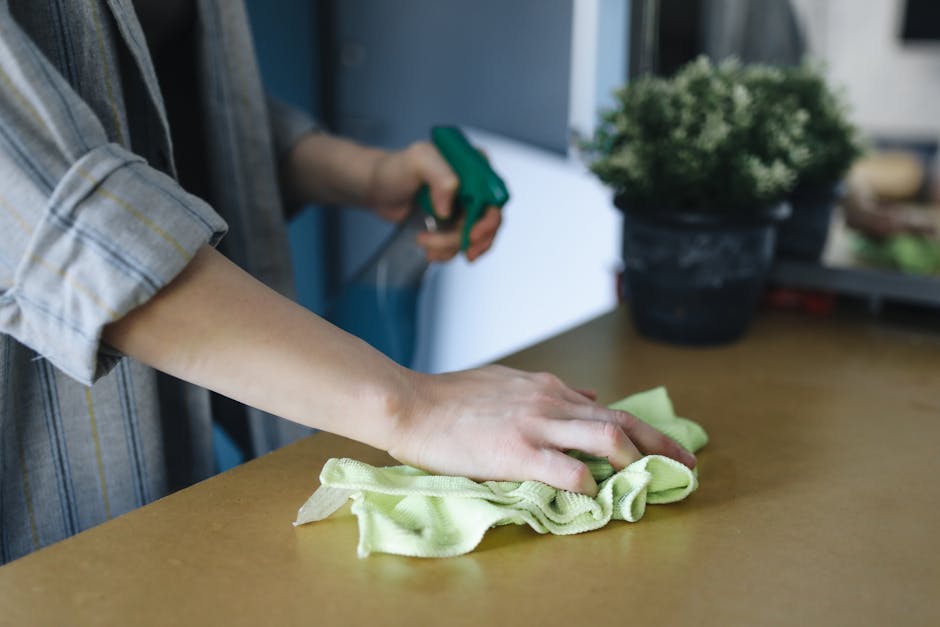
- Use two cloths instead of one. Keep one for general wiping and another for bathrooms or sanitising jobs. Cross-contamination is avoidable.
- Let products dwell briefly. On kitchen grease or bathroom limescale, give cleaners a moment to work before wiping. Rushing usually means scrubbing harder.
- Vacuum slowly on rugs and carpets. A quick pass looks efficient but often misses embedded dust and hair.
- Move light furniture regularly. Dust gathers under chairs, beds, and sofas. Even shifting items a little helps.
- Air fabrics after damp weather. London homes can hold onto moisture, especially in cooler months. A little ventilation goes a long way.
- Keep one small cleaning caddy ready. If supplies are handy, jobs get done faster. Basic, yes. Effective, absolutely.
One slightly overlooked tip: clean in the order you use the home. If you always come in through the kitchen and drop bags there, treat that area like a hotspot, not an afterthought. Same with the bathroom if you are getting ready for work in a rush. The home tells you where the pressure points are if you pay attention.
For more specialised fabric care, especially if your home includes delicate curtains or statement soft furnishings, it can be smart to read a practical article like how to wash velvet curtains properly. Not every fabric should be treated like a kitchen tea towel. Let's face it.
Common Mistakes to Avoid
Most cleaning problems in homes near SW11 station come from a few repeat mistakes. Nothing dramatic. Just habits that make everything harder than it should be.
- Cleaning only what you can see. Dust under beds, behind sofas, and along skirting boards matters more than people realise.
- Using too much product. More spray does not equal better cleaning. Sometimes it just leaves residue behind.
- Skipping the entrance area. If dirt comes in through the door, that area needs regular attention.
- Ignoring soft furnishings. Upholstery can hold smells, dust, and pet hair long after hard surfaces look clean.
- Mixing incompatible products. This is a safety issue, not just a cleaning mistake. Read labels carefully.
- Trying to do everything in one session. Big cleans often fail because they are too ambitious. Better to split jobs up.
There is also a timing issue. If you clean while the home is still busy, you may just be moving dirt around. In a shared flat, for example, it is usually better to pick a quieter slot and work room by room. Otherwise the kitchen gets used three times while you are still wiping the counter. Not ideal.
Tools, Resources and Recommendations
You do not need a house full of gadgets. In most Clapham Junction homes, a compact and sensible kit works best.
- Microfibre cloths: useful for dusting, polishing, and streak-free wiping.
- Vacuum cleaner with attachments: especially important for corners, upholstery, and stair edges.
- Mop and bucket or spray mop: good for hard floors, but make sure the pad is clean before use.
- Soft scrub brush: helpful for grout, sinks, and textured surfaces.
- Gloves: worth using for bathroom, bin, and descaling tasks.
- Basic limescale remover and degreaser: useful in London kitchens and bathrooms, where both scale and grease tend to show up regularly.
For people who want a fuller housekeeping rhythm, it can help to combine ordinary maintenance with occasional deeper support. Some homes only need a thorough refresh a few times a year, while others benefit from repeat domestic help. If you are comparing options, the practical overviews on domestic cleaning, house cleaning, and one-off cleaning can help you understand how different types of service are usually structured.
You may also want to consider carpet cleaning support if floors are starting to hold onto marks or odours. In busy homes, carpets are often the first thing to look tired. Sneaky little thing, that happens before you notice it.
Law, Compliance, Standards, or Best Practice
For everyday household cleaning, there is no special local rule that changes how you should clean just because you live near Clapham Junction. Still, there are a few good practice points worth keeping in mind.
First, use cleaning products safely and follow the manufacturer instructions. That includes diluting where necessary, keeping chemicals away from children and pets, and never mixing products unless the label clearly says it is safe. Second, if you are hiring a cleaner or using a cleaning company, it is sensible to look at their insurance, safety practices, and service terms so you know what is covered and what is expected.
It is also sensible to keep a basic record of what has been cleaned if you are preparing a rental property, managing a shared home, or handling a move-out. Not because you need paperwork for everything, but because clarity avoids arguments later. In the UK, tenancy expectations are often about condition and fair return, not miracle-level perfection. A home should be left clean and presentable, with ordinary wear and tear understood in context.
If you want to understand how a provider approaches trust and process, the pages on insurance and safety, health and safety policy, and terms and conditions are the kind of references that help set expectations before any work begins. That sort of transparency matters, especially when people are letting someone into their home.
Options, Methods, or Comparison Table
Different cleaning methods suit different homes. The best choice depends on size, time, and how much wear the property gets. Here is a simple comparison.
| Method | Best for | Strengths | Limitations |
|---|---|---|---|
| Daily tidy-and-wipe routine | Busy flats and commuting households | Fast, low effort, keeps mess under control | Won't remove built-up grime |
| Weekly deep room-by-room clean | Homes with steady foot traffic | More thorough, easier to maintain long term | Takes more time and planning |
| Seasonal deep clean | Homes needing a reset | Targets hidden dirt, fabrics, and neglected areas | Can feel overwhelming without a plan |
| Professional cleaning support | End-of-tenancy, busy families, time-poor households | Efficient, detailed, helpful for tough jobs | Costs more than DIY |
There is no single right answer here. A one-bedroom flat near the station might do brilliantly with a weekly routine and the occasional one-off clean. A larger family property might need a more formal plan. The aim is to choose what you can actually keep up, not what sounds impressive on paper.
Case Study or Real-World Example
Take a typical Clapham Junction flat-share. Two people work in the office, one works from home, and the hallway sees a steady stream of shoes, umbrellas, shopping bags, and the odd takeaway container. For months, the flat looks "fine" but always a bit off. The kitchen is wiped, yet the bin area smells by Friday evening. The bathroom is cleaned, but the mirror gets cloudy and the grout begins to dull. Nothing major. Just enough to make the place feel heavier than it should.
What changed? They stopped cleaning in random bursts and introduced a simple system. One person handled the entrance and bin area twice a week. Another took the kitchen surfaces, sink, and hob. Everyone agreed on a 20-minute reset on Sunday. They also booked help for a deeper refresh when the carpets and upholstery needed proper attention. The result was not a magical transformation; it was steadiness. The flat felt lighter, and the weekend no longer disappeared into catch-up cleaning.
That kind of outcome is very common. The biggest wins usually come from reducing friction. If the cleaning method feels easy, people stick with it. If it feels like a punishment, it gets delayed. And once it gets delayed, well, you know how that story goes.
For local readers who want to understand the company behind the service, you can also look at our background and approach or browse the wider blog archive for related home-care advice.
Practical Checklist
Use this checklist for a quick reset in Clapham Junction homes near SW11 station:
- Shake or vacuum entrance mats
- Wipe door handles and light switches
- Clear kitchen counters
- Clean sink, taps, and hob surface
- Empty bins and replace liners
- Sanitise bathroom touchpoints
- Vacuum carpets, rugs, and corners
- Mop hard floors after vacuuming
- Dust shelves, skirting, and window ledges
- Refresh cushions, throws, and other soft furnishings
- Open windows briefly if weather allows
- Check for hidden spills or odours
Quick summary: if you keep the hallway, kitchen, bathroom, and soft furnishings under control, most homes near the station stay manageable without much drama. That is the real goal. Not perfection. Just a home that feels good to walk into.
Get a free quote today and see how much you can save.
Conclusion
Cleaning tips for Clapham Junction homes near SW11 station work best when they reflect real life: busy mornings, mixed schedules, compact rooms, and plenty of coming and going. Focus on the areas that collect dirt fastest, build a routine you can actually keep, and do not wait until everything feels overwhelming before you reset it. A little consistency goes a long way, honestly.
Whether you are maintaining a flat, sharing a house, looking after a family property, or preparing for a tenancy change, the same principle holds true. Clean the high-impact areas first, protect the materials that wear out fastest, and make the whole job easier next time. Small improvements stack up. They always do.
And if today is one of those days where the place feels a bit much, start with one room, one surface, one bag of clutter. That is enough to begin. The rest follows.